// //

Top 5 Trekking Trails in Kerala

Also known as the ‘God’s Own Country’, the South Indian state of Kerala has been blessed several natural wonders. Verdant mist-clad mountain ranges, tropical rainforests and cascading waterfalls are some of these wonders. All these also offer memorable trekking experiences and become some of Kerala’s best trekking routes. The natural views, variety of flora and fauna is simply spectacular.

It is no exaggeration when we say that trekking is one of the most popular adventure activities in Kerala. The blog enlists 5 popular trekking & hiking trails in Kerala:

1. Chembra Peak

Chembra Peak is the highest peak in Wayanad, at 2,050 m above sea level.

Starting the trek from Meppady, near Kalpetta (district center of Wayanad), walking past aromatic huge green tea plantations, crossing mist-covered clouds like in a dream. You gradually make your way into the verdant jungles. Here you follow the trail made by the former trekkers or make your new trail to arrive the Chembra Peak, which has a height of 2100 m above sea level.


After covering this trek of 14 km, when you arrive at the summit, you realize it’s worth all the hardships. Trekking to Chembra Peak is ideal for those who have previous experience of trekking. You can also take guidance and assistance from the local tribal people. Do take their words! Prior permission from the Forest Office is mandatory.

Best Season :  October to May

2. Dhoni Hills


One of the most popular trekking trails in Kerala are the Dhoni hills. It takes a duration of 3 hours to reach the top. On the way, savor the lovely views of a small waterfall while on your way up.

If you are a peace-loving person who like places that are not crowded, there is a farmhouse on the top of the hill. This farmhouse houses hundreds of Swiss and other European types of cattle.

Best Season : After monsoon

3. Agasthyarkoodam Peak

Agasthyakoodam Trek in Kerala

Positioned at a height of 1868 m above the sea level, the Agasthyarkoodam Peak is reachable only on-foot. If folklores are to be believed it is said that revered Sage Agasthya made this peak his peaceful dwelling, staying amid nature. The local people say that females should avoid embarking on this trek as the Sage will not approve of it. All this adds to the charm of already mystical lush thick forests.

While trekking, savor the scenery and the tranquility spread all around you. You feel like you have been transferred into a whole new old. The trek route to Agasthyarkoodam Peak is a treasure house of different kinds of medicinal plants known to hold a lot of importance in the holistic healing science of Ayurveda. As you reach the hilltop, you can see a life-size statue of Sage Agasthya.

The trekking base is around 61 km from the capital city of Kerala, Thiruvananthapuram. Seek prior permission of the Forest Department. Another amazing sight on the top of the hill, is the view of blue-colored Neelakurinji flowers that blossom once in 12 years.

Best Season : December to April

4. Soochipara Waterfalls

Soochipara Falls also known as Sentinel Rock Waterfalls is a three-tiered waterfall in Vellarimala, Wayanad, surrounded by Deciduous, Evergreen and Montane forests.

Also known as Sentinel Rock waterfalls, Soochipara waterfalls are a three-tiered strong waterfalls that are popular for its trekking experiences. The waterfalls are around 22 km from Kalpetta, in the Vellarimala village. The last 2 km towards the waterfalls have to be covered on-foot, taking you through verdant forests. If you are lucky you might spot a friendly deer. The trek is of around 30 minutes. You will forget all your tiredness as you reach the falls. Do take a dip in the pool at its foot and enjoy swimming.

Best Season- June to September

See More:
25 Best Beaches in Kerala

5. Periyar Tiger Reserve

  
Periyar is a reserve forest and hence it remains in its natural form. This trek means admiring wonderful greenery, all around. During Periyar tiger reserve trek, you are accompanied by armed forest guards who are appointed by the Forest Officer. These guides known each and every thing about the forest and you must listen to what they say. 

[ Read More About Periyar National Park ]

The Periyar Tiger Trail takes around 24 to 36 hours and thus including night stay. Camping is arranged before the trek. The trek starts in the morning around 8:00 or 9:00 am. Walk past a herd of elephants or a shy deer. Do not disturb them! You are in their home. After the trek, you can simply relax by the Lake Periyar. This is a pure form of adventure trekking and camping.

Best Season : October to May

 [ Read More About Trekking Trails in Kerala ]

Related Post
Top 5 Best Places to Visit in Kerala
Kerala - A Complete Travel Guide
Holidays in Kerala - Backwaters Tours
Read More
// //

Gatimaan Express Luxury Train - From Delhi To Agra in 100 Minutes

India’s high-speed luxury train, Gatimaan Express has made its inaugural journey. The lavish ride runs from New Delhi to Agra. The Honorable Union Railway Minister Suresh Prabhu, flagged off the first ride today.

The launch of the train heralds a new era of high-speed rail travel in India. Though a far call from bullet trains, it is the fastest train in India, with a maximum speed of 160 km per hour. The best aspect of the train is its deluxe features and facilities, inspired from the series of ‘Palace on Wheels’ luxury trains in India. The train has made it possible to enjoy a luxurious day trip to Agra possible.

Gatimaan Express - Travel Time

The train will cover the 192-km distance between Delhi and Agra in all of 100 minutes. The train achieves the maximum speed of 160 km/ hr.
Timings

Amazing interiors of Gatimaan Express will make you go crazy

The Gatimaan service will be running on all days of the week, except Friday, the day Taj Mahal remains closed. The train starts from Nizamuddin station at 8.10 am and reaching Agra Cantt at 9.50 am. The return journey of the train will start from Agra at 5.50 pm and reach Nizamuddin station at 7.30 pm.


Gatimaan Express - Technology

Made by the Rail Coach Factory in Kapurthala, the Gatimaan Express boasts of some of the best technology for locomotives. The train runs on a WAP5 electrical engine of 1500 Horse Power. It is the best in-class loco produced so far by Chittaranjan Locomotive Works and Linke Hofmann Busch coaches.

Gatimaan Express - Technology

Most of the locomotive and the coaches are the same as used in Shatabdi Express, though several changes in the track and the signaling system have been made. One of the reasons behind the Gatimaan’s higher speed is that Northern Railways has worked to cut down more than 80 obstacle points on the Delhi-Agra route. Sharp turns, bridges, crossings and yards have been lessened. Also tracks have been tilted for the smoother and faster run of the train.

Gatimaan Express - Menu of Gastronomy Served

The Gatimaan Express, owing to IRCTC is set to provide culinary delights. Different from other regular passenger trains in the country, the catering is unique and a new sign of luxury. The hostesses will be serving both Indian and continental cuisine. Imagine, Chicken Sausages with Spanish Omelette, plus slices of Date Walnut Cake. If you are on the calorie-conscious band, you can opt for the Whole-Wheat Upma, Kanjeevaram Idli, or Freshly Cut Fruits.

Gatimaan Express - Menu of Gastronomy Served

Indulgent flavors of India are presented in delights of Aloo Kulcha, Mini Dosa, Chicken Roll and Swiss Roll are also on the menu. And the icing on the cake, everything will be served in Bone China. It is quite the gastronomical journey.

Gatimaan Express Entertainment

Gatimaan Express also provides free on-board entertainment by a private provider, MyFreeTv.in. There is an 8 inch LED Screen at the back of every seat. These screens are planned to be powered by satellite television and will broadcast live-feed. Passengers can also entertain themselves with videos during the travel on their smartphone, tablets or laptops even without internet connection through Wi-Fi.

Gatimaan Express Entertainment

Gatimaan Express Fare

The Gatimaan Express train comprises two executive AC chair cars and eight AC chair car coaches. The train will run with 10 coaches, including eight air-conditioned chair car (AC CC) coaches and two executive class bogies, with a total of 715 seats. The fare for an AC chair car seat is set at 750 INR and that for an executive AC chair car seat at 1,500 INR.

Pictures of India’s Fastest Train Gatimaan Express That You Should Definitely See!


Read More
// //

Buddhist Pilgrimage Train Mahaparinirvan Express : A Travel Guide

The Mahaparinirvan Express is a special Buddhist Pilgrimage Train. The train follows a spiritual tour of the Centres of Buddhism.  The train gets its name from the Mahaparinirvana sutra. In this particular teaching, Buddha tells his followers that they can attain merit and a noble rebirth by going on pilgrimage to the place where he was born (Lumbini), gained enlightenment (Bodhgaya), first taught (Sarnath), and attained Nirvana (Kushinagar).

Buddhism originated in India around 2500 years back. The Mahaparinirvan tour is a rich reminiscence of the Buddhist legacy. The divine life of Lord Buddha from his birth in royal family, his life of difficulties, his austere practices, attainment of enlightenment, passing on the knowledge to followers and the attaining of eternal bliss has been covered. This initiative by India Railways is a spiritual luxury. The train offers an 8 -day and 7- night journey in complete comfort. Started in 2002, the train offers journeys between the months of September to March. The train is a luxury and the journey one of the blessed travels..

Buddhist Pilgrimage Train Mahaparinirvan Express : A Travel Guide

Train Features

The Mahaparinirvan Train is a special train. The Mahaparinirvan Express is operated by Indian railways. The train uses carriages from a Rajdhani Express train. The train is a fully air conditioned offering three different classes of travel (first class, two tier and three tier). There are toilets with showers on the train. The tour has enough breaks where the travelers are taken to hotels to freshen up and for brief rest or at times overnight stay. There is an onboard hygienic kitchen car facility and passengers are served lavish hot meals. Packaged drinking water and tea/coffee Service is available. As this train is targeted for pilgrimage tourist, the luxuries are limited yet a very comfortable journey.

Route and Itinerary

Mahaparinirvan Express starts its journey from Delhi. The first stop is Bodhgaya where pilgrims pay reverence to the Mahabodhi Temple, Niranjana River, Thai Temple, Japanese Temple and Buddha Statue. In Rajgir/Nalanda, tourists visit the Bimbisara Jail, Gridhkut Hill, Nalanda University and Nalanda Museum. Sarnath is the holy site of the Dhamek Stupa and Ashoka Pillar, pay your respects. In Kushinagar, visit Mahaparinirvana Temple, Rambhar Stupa and Matakutir Temple. The next stop is Lumbini where pilgrims can tour Mayadevi Temple and Ashoka Pillar. Next the train proceeds to Shravasti where one must visit the Jetvana Vihara and Pakki Kuti. The tour ends with the last stop being Agra where you view the breathtaking Taj Mahal.

Journey Duration

The Mahaparinirvan Express covers the tour in 8 days and 7 nights. The tour starts from Delhi and ends there. The stops of the journey are associated with Buddhist religion.

Cost and Classes of Travel

The current cost and classes of travel in Mahaparinirvan Express are mentioned here. They are subject to change as per as Indian Railways. The fare in a first class air-conditioned compartment (1AC) is 165 USD per person, per night. Two tiered air-conditioned class (2AC) costs 135 USD per person, per night. Three tiered air-conditioned class (3AC) costs 115 USD per person, per night. There is also a 1AC Coupe that accommodates only two passengers traveling together. The cost includes the train journey, food, road transfers by air conditioned vehicle, sightseeing, monument entrance fees, tour escort, insurance, and hotel stay in air-conditioned rooms where required.

Visas for Nepal

The Mahaparinirvan Express includes a day trip to Nepal. The mountainous country shares boundaries with India. Visas for Nepal are a mandate for the visitors. Indian Nationals do not need visa. Foreign visitors in India need a Visa for Nepal. Their Indian Visa should also have double or multiple entry visas, so that their return to India will be permitted.

Read More
// //

5 Tribes of India with Fascinating Traditions

India is a colorful land with numerous mysteries hidden it its heart. These enigmas has always charmed people from all around. Foreigners visit India for its heritage, culture, festivities, traditions and food but if seen carefully, there no is particular Indian culture, as India is home to several traditions and cultures that co-exist here. This peaceful co-existence only beautifies and shows unity in diversity in India. 

All the 29 states and 7 Union territories have their own historical past, their rituals and their customs, varied from each other. After modernization and globalization, there have been changes in the lifestyle of several communities living in cities and towns but there still are groups of people who still holding onto their age-old ancient traditions, practices and customs. These people mainly are the tribes of India. Because of this, their heritage possessions becomes remarkable. The blog enlists 5 tribes of India with fascinating tribal traditions:

Chitrakars and Patuas: Tribals Who Make Songs and Paint on Fabrics


Painting on fabric or Patachitra, is known to be one of the most ancient indigenous art forms of Bengal. Chitrakars and Patuas are the tribes that are known to have a connection with this art form. The best feature of these people is that they are not only painters but they make beautiful songs too. The people can be described as travelling artists who carry their narrative scrolls around and narrate mythological takes with morals in the form of stories.


As they are singing, they unfold their scrolls as an illustration of their composition’s content that has been written as well as composed by their group members. It is believed that this tribal tradition in India finds its roots way back in the 13th century. Chitrakar and Patua are terms referring to Hindu and Islamic characters of the members of the tribe who stay together peacefully. They are known to be the masters of social change and entertainment by coupling-up paintings, singing and technique of storytelling. However, it is heart-wrenching they are losing their popularity and just a few people of this tribe live in Noya Village, West Bengal.

Cholanaikkan: A Primitive Tribe That Worships Ancient Spirits and Trees


The indigenous group living in south Indian state of Kerala, mainly in the Silent Valley National Park, the Cholanaikkans interact in old Dravidian dialect and just a handful of hunter-gatherer tribal members are remaining. This is an aboriginal tribe that is endangered, lives in makeshift huts and rock shelters in solitude. They were away from any kind of modernization, still following the stone-age lifestyle, until the 1960s when contact was made with them for the very first time.


They have made small modern adaptations like using household tools and wearing clothes, but they still enjoy seclusion and stay away from modern standard of life and technology. They continue their life sticking to the Mother Nature. These tribal people follow animism and worship ancient spirits, not believing in idol worship. The trees are their only devotional symbol that they worship them too.

Khasi Tribe: A Tribe that follows Matrilineal System and special Divorce Ritual

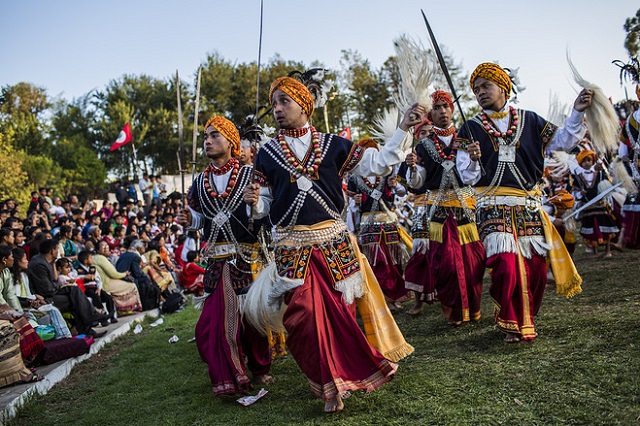
Khasi Tribe Celebrating annual dance festival in Shillong
Khasi Tribe celebrating annual dance festival in Shillong.
Living in the northeastern state of Meghalaya, the Khasi tribe gets its named from the language in which they interact. A major chunk of their population resides on Assam’s border areas. A Matrilineal System is followed by this ethnic tribe. Under this system, the woman is the head of the family, a girl child inherits the mother’s property and children get the surname of their mother. This is just one of the special features of this tribe. 

Another outstanding feature is having no strict rules against divorce. A marriage is terminated only after a strange method of divorce is completed. The traditional ritual in divorce process requires the husband handing over 5 paise to his wife after which the wife adds her own 5 paise to this and finally return the total. The 2 coins are given to an elderly member in the village. He tosses the coins, thus concluding the process of divorce.

Siddi: An African Tribe with only its Traditional musical possession


There are 20,000-55,000 Siddi tribal member sprinkled in Indian states like Gujarat, Hyderabad and Karnataka, and Karachi and Makran in Pakistan. Little is known about their origin but it is still known that they are the progenies of Bantu peoples of belonging to Southeast Africa. They were transported to India as slaves by the Portuguese and Arab merchants somewhere between the first half of 600 AD and the first half of 700 AD. As they have lived in India from centuries, they imbibed several Indian customs, thus, losing their original African cultural traits. Nevertheless, there is one thing that they have been able to hold onto, which is their traditional dance and music form. 

This tribe in Gujarat though has taken-up a lot from the region’s locals but they have conserved the Goma (also known as Dhamaal) dance and music form, that originated from Ngoma dance and drumming forms in Bantu East Africa. This is a spiritual music and dance form where it is believed that the performers become the vehicles for the spirits of their ancient saints.

Jarawa – The Tribe That Changes the names of their Pubescent Members


The native people of the Andaman Islands, the Jarawas, have not been unfriendly towards the modern civilization but they have held onto your original customs and traditions. Like other tribal traditions, there is no reason behind the customs that are followed by these people, the Jarawas have full trust in them. One such very exciting custom is that they rename their children, during an extravagant ceremony, when they attain puberty. 

As mark of their growing up, the boys and girls need to partake in different activities. While they boys are needed to kill a pig and offers to the village members, the girls are smeared in pig oil, gum and clay. After this, they get their new names. Apart from this, there are a number of other traditions of Jarawas, that can be termed as interesting. Although the tribe members are non-vegetarian but are careful of not eating the meat of deer even if it found in abundance in the region as they consider it sacred. They also follow natural methods of birth control.

It is no exaggeration when said that though these tribes are considered backward but there are probably a number of things that can be learned from them. The Gowda tribe of Goa is known to be practicing a number of rights to women, in matters of society, politics and economy. Their wives are allowed to inherit her deceased husband’s property. Living in a Utopian society, the Mru tribe of Jalpaiguri in West Bengal can teach an egalitarian lifestyle to people. They have just a few inherited positions, have equal rights for all the members of the tribes, even in troublesome conditions and there is no caste system here. 

The Kharia Tribe of eastern India is another such tribe holding onto its old rituals such as still practicing their primitive dance form where they dance and singh for each other, be it individually or in groups. Apart from this is The Bhotiyas of Northeast India who make use of marijuana as Bhang during religious purposes. Halakki tribe of Karnataka though is quickly vanishing tribe but they really value their music. The female members of the group are extremely vocal about all the phases of their lives through self-composed songs and poems.

Along with the above mentioned tribes, there are a number of other tribes in India, such as Baule, Mishing, Chechus, Kharias, and Sentinelese, who live in the private corners of the country, pretty away from any modernization. They still follow their ancient traditions wherein some are extremely interesting tribal traditions of India. One can easily get a sneak-peak into primitive style of living but can also learn the art of co-existing peacefully without belittling each other. The best to experience all this is by taking your backpack and visit the secret corners of the country where the tribals still conserve their traditions.

Read More
// //

15 unique ways in which Diwali is celebrated across India

Diwali, the Festival of Lights is celebrated grandly everywhere in India. The multi-cultural country has numerous legends associated with it. Every region of the country has unique ways to celebrate the festival. Find out 15 unique ways in which Diwali is celebrated across India:

Maharashtra worships the holy cow first

Maharashtra -  Worships the holy cow first

Given the status of holy to India’s most loved animal cow, the country looks for excuses to worship this milch animal and in some way or the other succeed in doing so. But who would have thought that the festival of lights, Deepavali too has some meaning for the animal. This happens in the Marathi dominated state of India, Maharashtra where the celebrations of Diwali start early; not with oil lamps or crackers, but with a ritual for the holy cow they call the Vasu-Baras.

Symbolizing the love of a mother towards her baby, a Hindu prayer (Aarti) is performed for the cow and her calf at every home of the state. On this day, people keep a special kind of fast in which they partake only a single meal for the day. The whole idea behind going different from the rest of India during Diwali is it is believed, largely by the Marathis that during the auspicious time of Diwali, the environment gets filled by a lot of spiritual energy, which further causes disturbance. In order to balance it up, this cow ritual have to be performed through which the energy of Lord Vishnu is channelized for the spiritual stability of the ambience.

Orissa- Poles of Bamboo to lighten the path to heaven

Orissa- Poles of Bamboo to lighten the path to heaven

Travel to Orissa during Diwali and you will find tall bamboos tied erected in front of the households. Each of these bamboos usually have an earthen pot tied to it which is further raised to a height by using a rope. On the inside of the pot is kept a lamp; thereby giving the whole structure a resemblance of a street lamp. The reason why they do it? Well, people of Orissa believe that by lightning the dark paths in this fashion will help the spirits of their dead ancestors find a way to the heaven. 

This tradition is in existence in the state since the very old times, even though the modernity illuminates the houses with multi-colored lights and bulbs.

Diwali starts with prayers to Goddess Kali in West Bengal

West Bengal - Diwali starts with prayers to Goddess Kali

Though the whole of India worships Goddess Lakshmi on Diwali, West Bengal residents, Bengalis worship Maa Kali. Diwali is a two day affair for people here. Laxmi Pooja celebrated in rest of the country has been earlier celebrated here. 5 days after the festival of Dusshera on a full moon day, the Goddess of Wealth has been already been worshipped. 

As Diwali is celebrated on the new moon day, Amavasya, the fierce Devi Kali is worshipped. In the same pandal where Goddess Durga was worshipped few days back, the stage is now the ‘Goddess of Destruction’ so that new beginnings can happen. The festivities are the same. Earthen lights, electrical lighting and firecrackers light up the skies. The devotees of Maa Kali fast the entire day. Some fast without water the entire day. The next day feast of delightful sweets and traditional food is available.

Goa burns demon effigies on Diwali

Diwali at baga beach in Goa
Diwali at baga beach,Goa
Amongst the various events and festivals that take place in Goa during the time of winters, Diwali is highly prominent. Goans have an altogether different theory from the main mythology that revolves around this festival. As per the legend, Lord Krishna killed a demon king, named Narkasur, on this very day by slaying his head with the Sudharshan Chakra. In honor of such an event, every year during the time of Diwali, people of Goa publically burn the effigies of the demon king Narkasur. Rest of the celebrations stay the same as in the rest of India; cleaning of the houses, decorations with traditional lamps, lights and fireworks.

Assam - Diwali Heralds New Wealth

Assam - Diwali Heralds New Wealth
Image Source: commons.wikimedia

Diwali in Assam is a grand festival. The state worships the Goddess of Wealth and prosperity. Prayers, diyas, aartis and Rangoli are the beautiful allures. Not only the homes are beautified to welcome the Goddess, every road every nook and corner is illuminated. Businesses worship the book of accounts in this day so that prosperity continues. New wealth is heralded in the auspicious festival. New things are brought. Old and broken things are dispatched from homes. Like the other regions of the country, firecrackers lighten up the skies. Mithai and warm greetings are exchanged.

A 'Choti' Diwali before the main day in Bihar

A 'Choti' Diwali before the main day in Bihar

People in Bihar follow the tradition of celebrating a smaller version of Diwali, just a day before the main festival. Known as Choti Diwali, celebrations of this day are marked by fewer lights and crackers are fired as compared to the main day. Devotees usually observe a day long fast, which gets over only after sunset. 21 diyas are lighted on choti Diwali. The day of Diwali starts with a holy snan in River Ganga. The evening starts with the worship of Goddess Lakshmi. Lights, Rangoli, sweets an firecrackers are the allures. The homes can be seen twinkling with millions of diyas and electronic lights in all shapes and clouds hung.

Jammu & Kashmir – Don’t Forget To Visit Dal Lake in Srinagar

Jammu & Kashmir – Don’t Forget To Visit Dal Lake in Srinagar

Jammu and Kashmir celebrates the Festival of Lights in their own charming way. The Kashmiri Pundits celebrate the festival grandly. The homes are lighted up. People have cleaned their homes. Thrown away the broken and unwanted things. Prayers have been offered to the Goddess of Wealth. Sweets, dry fruits and traditional delicacies are exchanged. Diwali is incomplete in the heavenly mountain state without a mention of Dal Lake. The beautiful Dal Lake in Srinagar is seen lighted up with millions of diyas floating on the waters. The glittering lights, the snowcapped mountains in the background and the peaceful ambiance are the perfect elements of a chersihed memory.

Double festivity at Golden temple in Amritsar (Diwali/Bandi Chhor Diwas)

Double festivity at Golden temple in Amritsar (Diwali/Bandi Chhor Diwas)

If you are looking for an enormous show of lights, head to Amritsar in the state of Punjab during Diwali. The city’s main attraction, the sacred and graceful Golden temple gets all covered in jubilant lights and traditional lamps, making the sight a perfect behold. Having said that, the Sikhs have another reasons for such a decoration of the sacred Gurudwara, other than Diwali. 

It’s the anniversary of the release of the 6th Sikh Guru, Guru Hargobind Ji along with 52 other prisoners (Hindu Rajput princes) from the Gwalior fort, which is known as ‘Bandi Chhor Diwas’.  Looking at the ample decorations by traditional lamps and lights during the occasion, some might fail to separate the two festivals. However, it is important to understand the significance of this festival as it overshadows the spirit of Diwali in some way at the Sikh dominated city of Amritsar. Put it anyway, glittering beautiful lights, firecrackers and feasts is the essence of both the festivals.   

Race for the title of the best decorated market in Rajasthan during Diwali

Race for the title of the best decorated market in Rajasthan during Diwali

Vibrancy of Rajasthan use to be at its prime during the time of festivals. One such occasion is the festival of lights; Diwali, which is celebrated in a unique fashion at this colorful state. The prime cities of Rajasthan like Jaipur and Jodhpur gets all dazzled up with colorful lights and decorations, Where ever one sets his sights on, a rumble between glittering artificial as well as traditional lights can be seen.

Not to forget the crackers which resonate the whole environment and symbolically banish the evil off the streets. The festive crescendo highlights a big shopping festival in the pink city. The festival invites many small and big markets of Jaipur in which they strive to be the best decorated one. Offering a plethora of items; traditional, decorative, household and apparels, these markets are set at different locations of the city like the Vaishali Nagar, Jayanti Bazaar, Chandpole Bazaar, Chaura Rasta and Raja Park. With so much festive exuberance, Diwali is surely a carnival festival in Rajasthan.

Himachal Pradesh - Where Tales of Ramayana Are Narrated & Performed

Himachal Pradesh - Where Tales of Ramayana Are Narrated & Performed

Hindu mythology explains the festival of Diwali as the occasion when Lord Rama along with his wife Sita and brother Laxman returned to his home land Ayodhya after completing a long term of exile. All this along with the complete story of Lord Rama and his fight with the demon king Ravana is mentioned in detail in Ramayana. Thus, getting themselves completely devoted towards the great Lord are the people of Himachal Pradesh, where tales from the Ramayana mythology are narrated and enacted in the form of a play. This resembles a lot to the celebrations of Dusshera; Ramlila, in North India. 

Oil bathing customs in Tamil Nadu


Tamil Nadu celebrates Diwali a day earlier than the date available for the whole nation. This is because of the traditional Tamil calendar that links this festival with the month of Aipasi (thula). Well, the point here is not about the date, but the unique way in which Diwali is celebrated here.

Preparations start a day before, owing to which people clean their ovens.  A coating of lime is put on the ovens and then the containers are filled with water for the next day’s oil bathing ritual. On the festival day, families wake up very early to have an oil bath before the sunrise. The belief following this custom says that it is equivalent of having a bath in the holy Ganges. Elderlies apply Gingelly oil on the head of the younger members of the family, which then culminates into a full body oil bath. Some natives of the state also apply a medicinal ayurvedic paste, known as ‘Deepavali Lehiyam’ right after the oil bath. After the completion of this unique ritual, partake of a hearty breakfast of sweets and various other South Indian dishes takes place. Crackers and the other usual celebrations of Diwali follow later.

Delhi’s perfect festive moods!

Delhi’s perfect festive moods!

Delhi, the multi-cultural capital city of India celebrates numerous festivals of different religions and ethnicities in full enthusiasm and gaiety.  One prominent amongst them is the Hindu festival of Diwali. The capital does not wait for the festival date, rather the festivities of Diwali start three weeks before; right after the Dusshera festival. Right from that day, the capital sets a trend of shopping; discounted sales and promotional offers.

As the days of the festival are considered auspicious for buying new items; apparel, furniture, jewelry, all the popular shopping joints of the country get crowded with people. Besides, the evenings at some corners of the city are meant for staging the tales of Ramayana. The main day of the festival is meant for Laxmi Pujan, which people at their homes and offices perform with proper devotion. Unique thing about Diwali celebrations in Delhi is that it grips all the people irrespective of the difference in the caste, religion and community in one thread of festivity which in turn illuminates the whole city like a newlywed bride.  

Diwali gets a sacred touch at Varanasi, Uttar Pradesh

Diwali gets a sacred touch at Varanasi, Uttar Pradesh

Varanasi in the state of Uttar Pradesh is one of the very few places in India that knows how to manage religion. In other words, the city is the core of Hindu religion in India. Owing to such significance of this place, it is not hard to guess the picture of the Diwali night here.

A true visual delight, Diwali celebrations at Varanasi are highlighted the best at the city’s sacred Ghats. Thousands of brightly lit earthen lamps mark the decorations of the river lines. Look them from a height and they resemble golden stars devoting their lights completely to the Ghats. Little away from the river line are the enactments of Ramayana, locally known as Ramlila goes on. Adhering to professional actors, these Ramlilas are certainly amongst the best in India. Such an infusion of religion, devotion and art, makes Diwali at Varanasi highly unique.

Gujarat - Celebrating New Beginnings with Family and Friends

Gujarat - Celebrating New Beginnings with Family and Friends

In Gujarat, Deepavali is the festival that brings together families, friends and religions. The festivities are five days long. Every home, from the hut of the poor to the mansion of the rich is lit with twinkling diyas. Lakshmi, Goddess of wealth and prosperity is welcomed. Floral decorations, fireworks and rangoli add grandeur to this festival. The five days of Deepavali are Dhan Terash, Kali Chaudasa, Diwali, Padva or Varshapratipada (starting of Vikram Samvat, New Year) and fifth day is Bhai Bij. Seventh day is the auspicious day for any good things to begin. Like the whole nation, Gujarat celebrates with New Year shopping spree, cleaning homes, preparing dishes, wearing new clothes, bursting crackers and exchanging greeting.

Madhya Pradesh

Diwali - one of the most important festivals celebrated in India

Madhya Pradesh like the whole of India has a multi-ethnic population. Lying in the heart of India, the state has a dominant population of tribals. The tribals celebrate Diwali in their own charming way. From their attires, huts, dance and songs, the festivities are a kaleidoscope of colors. The melodies of their songs are pleasing. The cleaning of homes, worshiping, and exchange of gifts are similar to other parts of India. The festivities in the tribes are carried out in their own manner. Some of the activities that people indulge in are cock fighting, drinking, carefree revelry, dancing and singing. The customs may differ but the feeling of peace, new beginning and unity are felt throughout the country.

[ Read more about Diwali Festivals in India ]

Related Post:
Read More