Showing posts with label top temples in India. Show all posts
// //

Tirupati Balaji Temple, Andhra Pradesh: A Travel Guide

Tirupati Balaji is India's most visited religious shrine. Every year millions of devotees pay visit to this revered shrine in the Chittoor District of Andhra Pradesh, India. It is renowned for the Sri Venkateshwara Temple dedicated to lord Vishnu, who is also called by several names like Balaji in the North and Govinda in South India. The Lord Sri Venkehwara is the all pervading Lord of the universe.


Tirumala Tirupati Balaji Temple, Andra Pradesh
Tirumala Tirupati Balaji Temple in  Chittoor, Andra Pradesh

One of the top 10 temples of India, Tirupati Balaji is placed at the top of the Tirumala hills, while the town lies at the foothills. The Tirumala Hill has seven peaks, which is said to represent the seven hoods of a serpent underneath where Vishnu resides. The area has the peaceful and religious air about it; the pilgrims come to the temple with lofty faiths. 

Location: Tirupati is located in the Chittoor  District  of Andra Pradesh at the foothills of the Eastern Ghats, and the temple of Sri Venkateshwarya is placed on the seventh peak Venkatachala.The temple lies on the Southern banks of Sri Swami Pushkarini.

Who built it: Unfortunately, there are no records of the origin of the Temple, but was maintained and upgraded by various dynasties in the past. The temple is patronized by the Pallavas, Cholas, Pandyas and later kings of Mysore.

How to reach:  Tirupati Airport is 15 km from the city center and offers several domestic flights. The closest International flight is in Chennai (130 km) from Tirupati.

The major railway station is the Tirupati Main; the trains take you to major cities like Chennai. Bangalore, Hyderabad, Kochi and more.

One of the largest bus station (Sri Hari) is one of the largest in the state, which has direct bus service to the nearby towns and big cities. There are many government operating services too.

Best time to visit: Almost all the seasons are favourable for you to visit Tirupati. However, if you want to experience the place in its full swing, the best time would be to go during the festival time. Especially the festival of Brahmotsavam, celebrated around Diwali (October) is a good option. Also, when you are there, it is better you go early for your services to God because of the crowd.

Interesting Facts:
  • One of the legends behind the worshiping of Lord Vishnu is that the temple houses a deity of Lord Venkateshwarya (Vishnu) which is believed to remain there until the end of the present era or Kali Yuga. It is further believed that by worshipping him we will attain mukti or salvation.
  • Tripura has several temples and is a major economical and educational hub in south. It is one of the richest pilgrimage centers.
  • The Tirumala Hill is 853m above sea level and is about 10.33 square miles. 
  • It is believed that About 50,000 pilgrims’ visit the temple every day and during the festivals like, yearly Brahmotsavam the number of pilgrims is almost 500,000. 
  • The celebrated festivals are Vaishnava festivals, Rama Navami, Janmasthtami . while the most important festival celebrated each year is Brahmotsavam.
  • Tirupati is regarded as one of the oldest temples which were mentioned in Puranas and the Shastras.              
  • Tirumala, the name is derived from the terms, Tiru means Holy and mala means hills, therefore the holy mountains.
  • There are several deities in the temple like Dhruva Beram, Bhoga Srinivasa, Ugra Srinavasa and many more.
  • The temple bares several inscriptions that are of historical, linguistic and cultural importance.
  • In the temple, the devotees shave their head as an offering to the God, the daily collection of the hair amounts to almost a ton. These hairs are later sold in auctions to international buyers who turn them into extensions.
  • The thuylabharam offering is done in the temple, where a devotee sits on a weighing balance scale and has to offer materials heavier than his weight.
Places of Interest: 
  • An archeological museum, Chandragiri Fort.
  • SV Zoological park (the second largest zoo in Asia).
  • Jungle book Biological Park.
  • Regional Science center and Planitarium.
  • There are many other temples that you can visit in Tirupati and Tirumala apart from the famous  Sri Venkateshwarya Temple.
  • Alamelu Mangapuram Temple.
  • Padmavathi Ammavari Temple.
  • Kapila Theertham (dedicated to lord Shiva ans Parvati).
  • Govindaraja swamy Temple and more.
Tirupati and Tirumala is a pilgrimage spot, offering you a visitation for a different experience altogether. The faith of the devotees and the chanting of the priests echoes around the hills of Tirumala. There is a feeling of utmost peace and serenity in the place.
Read More
// // Leave a Comment

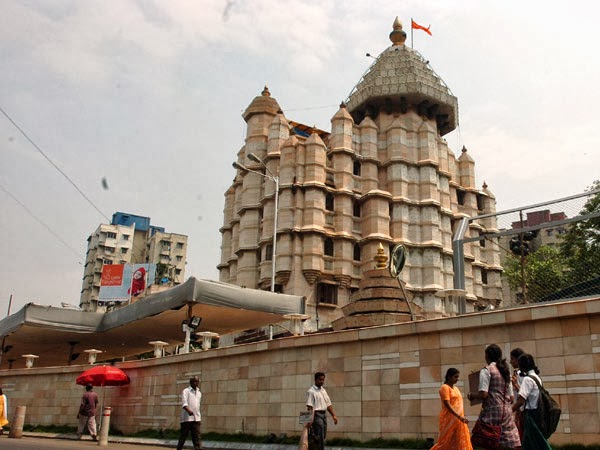
Siddhivinayak Temple: Top Temples in India

One of the most famous temples of India, located in Prabhadevi, Mumbai, Maharashtra, The Shree Siddhivinayak Ganapati Mandir is a Hindu temple devoted to Lord Ganesh.  Built by Laxman Vithu Patil, the temple welcomes devotees from all around the country and the world to attend religious ceremonies throughout the day and to pay their respects to the Lords. It is currently the richest temple of India.

Sidhiviyak Temple, Maharashtra
Siddhi Vinayak Temple is the 4th richest temple in India

Location: Situated in Prabhdevi, Mumbai in the state of Maharashtra.
Built by: Laxman Vithu Patil
Built in: 19 November 1801
Highlights: Shopping stalls at Phool Gali, Lord Ganesh Aartis and other temple rituals, Special events during Angaraki and Sankashti Chaturthi.
How to Reach: From the city of Mumbai, local transport is easily available to reach Prabhdevi locality, where Siddhivinayak Temple is situated. The nearest airport is Chhatrapati Shivaji International Airport at a distance of 25 km from where you can easily avail autorickshaws or taxis. The nearest railway station to the temple is Dadar. Mumbai local trains can be boarded from Elphinstone Road, Parel and Mahalaxmi to reach the temple.
Best time to visit: Because of the hot and humid weather conditions of Mumbai in summers and wet conditions during rainy seasons, winters are the best season to visit Siddhivinayak Temple.
Entry Fee: Nil
Timings: 5:30 A.M. to 10:00 P.M. (Wednesday to Monday); 3:15 A.M. to 10:00 P.M. (Tuesdays)

Introduction
Indians have a tradition of bowing down to Lord Shree Ganesha before setting out for new ventures. Shree Siddhivinayak Temple, located at Prabhadevii, allows the worshippers from all over the world to fulfill their desire of bowing down to the Lord Ganesha.

 The Siddhivinayak Temple offers the locals and the tourists in Mumbai to sit back and observe the place of historical interest and worship. The temple is not only the most popular destination among the devotees but it also acts as an archaeological site of India.

Shree Siddhivinayak Temple, built in 19th November, 1801 is famous for housing the black stone idol of Shree Sidhivinayak with a tilted trunk. The idol is consecrated having four hands, holding a bowl full of Modaks and a small axe in left hands and a lotus and holy beads in the right hands.

On the forehead of the deity, is an eye, resembling the third eye of Shiva. On both sides of the deity are Siddhi and Riddhi which are the goddesses symbolizing riches, fulfillment, sanctity and prosperity.

History
Siddhivinayak Temple was built on a Thursday, 19th November 1801, by a professional contractor and a great devotee of Lord Ganesha, Mr. Laxman Vithu Patil. Mrs. Deubai patil provided the financial support for the construction of this temple.

She could not conceive a child and the idea that led for the construction of the temple was to provide a worship place to other childless women to pray for a child from Lord Ganesha.

Myths and stories that revolve around the temple have led the devotees to believe that Deubai’s humble request was accepted by Lord Ganesha.

In the beginning, it was a small structure housing the black stone idol of Shree Siddhivinayak. The temple complex was approximately 2550 Sq. m in area and consisted of two Deepamalas, a rest house and living quarters for the caretaker. In 19th century, Nardulla dug up an adjoining lake to counter the water scarcity in the region.

Later, the lake was filled up and now it constitutes a part of the temple complex. During a road extension project in the year 1952, a Hanuman icon was discovered. A small shrine for the Hanuman icon was built in the temple complex.

 By 1952, huge crowds started visiting the temple and by 1965, long queues of devotees were started to be seen outside the temple.

Some Interesting Facts about Siddhivinayak Temple
  • Siddhivinayak Temple is the 4th richest temple of India

  • The dome over Ganesha's idol inside the temple is coated in 3.7 kilos of gold

  • Among devotees, Siddhivinayak is popularly known as “Navasala Pavanara Ganapati” or “Navasacha Ganapati” which stands for 'Ganapati bestows whenever humbly genuinely prayed a wish'

  • A legend goes that Ramakrishna Jambhekar Maharaj, a disciple of Swami Samarth, was asked to bury two divine idols in the temple by his guru. After 21 years, as Swami Samarth prophesized, a mandar tree grew there with a svayambhu Ganesha in its branches

  • There is a place nearby temple where Saint Ved Vyasa performed sacrifices. The spot is now covered with water

  • Siddhivinayak Temple is said to be primarily built by Lord Vishnu, later reconstructed by Peshwas

  • A popular belief about the temple among the devotees is that all the honorable and humble wishes of the devotees will be fulfilled by Lord Ganesha on visiting the temple

  • Every year, tourists from all over the world keep flanking the place in large numbers

  • Many celebrities, including businessmen, film stars, industrialists, political leaders etc. visit Siddhivinayak temple, whenever they embark on a new venture
You may also be interested in finding out the top 10 temples in India. Click here!

Written By
Read More
// //

Golden Temple Amritsar: Top Temples in India

Harmandir Sahib or the Golden Temple in Amritsar, Punjab

Sri Harmandir Sahib also called Darbar Sahib and popularly referred to as the Golden Temple is the holiest site of Sikhs and the most iconic symbol of heritage and traditions of Sikhism.

Golden Temple is also voted as one of the seven wonders of India.

We have also included this temple in our list of top 10 temples in India.

Golden Temple
Golden Temple in Amritsar is the holiest Sikh site in the world
History of Harmandir Sahib
Construction of the Golden Temple was completed under the tutelage of the fifth Sikh guru Arjan who himself laid the foundation stone in 1558.

According to the legends, the Gurudwara came up around the lake Amrit Sarovar excavated by fourth guru Ram Das. Under the leadership of Guru Arjan, the Gurudwara construction was completed in 1604 and Guru Granth Sahib was installed at the Golden Temple.

The story goes that impressed by the local lifestyle and as an act reverence to the third Sikh guru Amar Das, Mughal Emperor Akbar gifted a small piece of land to his daughter on occasion of her marriage to Bhai Jetha who later became the fourth guru Ram Das.

In yet another legend, it is believed that Guru Amar Das found the cure to the skin disease of the second Sikh guru Angad on the banks of this pool. It is also one of the reasons why the water of Amrit Sarovar is considered to contain medicinal property.

Significance of Golden Temple Architecture and Design
Harmandir Sahib or the Golden Temple is a fine specimen of the Sikh worldviews and religious tolerance. There are 4 entrances to the golden temple which signifies Sikhism’s openness to other religion, creeds and people.

Interesting facts about the Golden Temple
  • Darbar Harmandir Sahib is constructed of white marble which is overlaid with gold hence the popular name Golden Temple
  •  It is open to all irrespective of caste, creed, religion or sex
  • Golden Temple is surrounded by a large lake known as Amrit Sarovar or the pond of immortal nectar.
  • The township of Amritsar is named after this lake and grew around the pool surrounding Harmandir Sahib
  • Devotees perform ablutions in the pool water which is believed to have medicinal properties
  • The original Golden Temple was destroyed by the invading Afghan forces of Ahmad Shah Abdali and the present one was rebuilt by Jassa Singh Ahluwalia in 1764
  • The floor of Golden Temple were gold plated during the reign of Maharaja Ranjit Singh who secured the Punjab from external aggression
  • There are 3 holy ber trees inside the Gurudwara Complex signifying important event in Sikhism
  • The most important celebration inside Golden Temple is held on second week of April on occasion of Vaisakhi which is also the founding date of Sikh Khalsa
  • Langar or the free meal is arranged for thousands of devotees who visit Golden Temple everyday
  • Cooking of food and washing of utensils inside the temple is done by volunteers who visit this holy place
Best Time to Visit Golden Temple
The months from October to March are considered as the best time to visit Amritsar. The weather during this period is very pleasant and is ideal for sightseeing.

How to Reach
Amritsar is well-connected with all modes of transportation. Amritsar can be easily reached by train, road or airways and the tourists should not face any problem in accessing this amazing city.

Airways:  Tourists can get regular flights throughout the day to Amritsar from the Raja Sansi International Airport located in the city of Amritsar. This international airport also connects with some other cities of India as well as of the world.

Railways: Amritsar has its own railway station that is well-connected with all other important railheads of Punjab along with other towns and cities of India. A number of trains run on a regular basis from this railway station.

Roadways: A number of private as well as state buses run in and around the state. Amritsar is linked with Delhi through the G.T Road. Tourists can also opt for deluxe and deluxe buses that run on regular basis connecting Amritsar with several other important places in India.
Read More